











Best Laser Engravers for Museums: Complete Buyer's Guide (2026)
Museums have very different engraving needs from typical workshops or maker spaces. In a museum, a laser engraving machine may be used to create elegant exhibition signage, fabricate acrylic display cases, produce educational materials, personalize gift shop merchandise, or permanently mark collection assets for inventory management.
Because these applications involve such a wide variety of laser engraving materials, wood, acrylic, glass, stone, leather, paper, and metal, no single laser technology is ideal for every task. A machine that's perfect for engraving accession tags on stainless steel won't necessarily be the right choice for cutting an oversized interpretive panel.

How Do Museums Use Laser Engravers in Australia?
Laser engravers have become valuable tools across nearly every department of a modern Australian museum. Here are 9 common applications for laser engravers in a museum:
- Creating exhibition signage and informational plaques
- Producing custom acrylic display stands and mounts
- Cutting architectural models and exhibition components
- Fabricating educational materials for workshops
- Engraving donor recognition plaques
- Producing branded gift shop merchandise
- Permanently marking inventory tags and accession numbers
- Engraving maintenance tools and storage labels
- Creating tactile learning materials and accessibility displays
Because these projects involve such a diverse range of materials, choosing the appropriate laser technology is the first and most important decision a museum will make.
Common Laser Engraver Uses in a Museum (With Recommended Models)
| Museum Application | Recommended Laser | Best Materials | Recommended Model |
| Exhibition signage | CO₂ Laser | Acrylic, wood, MDF, leather, paper | OMTech Polar Lite 55W Laser Engraver |
| Display fabrication | CO₂ Laser | Acrylic, plywood, foam board | OMTech Polar+ Desktop Laser Engraver |
| Glass and stone engraving | CO₂ or UV Laser | Glass, slate, marble | OMTech Pronto 60W CO2 Laser Engraver |
| Metal inventory tags | Fiber Laser | Stainless steel, aluminum, brass | OMTech Galvo 20W Fiber Laser Engraver |
| Gift shop personalization | UV or MOPA Fiber | Jewelry, metal gifts, glass, crystal | OMTech 30W MOPA Fiber Laser Engraver |
| Educational workshops | Enclosed CO₂ Laser | Wood, cardboard, acrylic, leather | OMTech Polar Desktop CO2 Laser Engraver |
What are The Best Types of Laser Engravers for a Museum?
The best laser engraver for a museum ultimately depends on how it will be used. Many museums in Canada primarily produce exhibition graphics and display panels, and so will benefit most from a high-quality CO₂ laser engraver. However, there are many other museums focused on inventory management or engraving metal collection tags that will often achieve better results with a fiber laser engraver. The bigger international museums, like the Royal Ontario Museum, which need both capabilities, may even invest in multiple systems to cover different departments.
 Laser Engravers For Museums: How to Choose
1. CO₂ Laser Engravers: Most Versatile Option for Museums
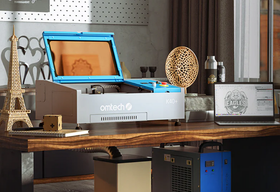
CO2 laser engraving machines are the most versatile option for museums overall. They process a huge range of organic and semi-organic materials: acrylic, plywood, MDF, cardboard, paper, leather, cork, rubber, glass (engraving only), and stone (engraving only). This makes CO₂ the default choice for signage, display fabrication, and educational programming.
They are especially valuable for history, natural history, children's, science, art, archaeology, ethnographic, and local heritage museums, where exhibit fabrication, educational programming, and custom display production rely heavily on wood, acrylic, paper, leather, and other non-metal materials.
Common Uses of CO2 Laser Engravers in Museums
| Museum Type | Typical Projects | Why CO₂ Is Ideal |
| History Museums | Signs, replica artifacts, display cases | Excellent for engraving and cutting wood, acrylic, leather, and paper-based exhibit materials. |
| Natural History Museums | Specimen labels, fossil mounts, educational exhibits | Easily fabricates acrylic mounts and educational components while producing clean engraved labels. |
| Children's Museums | Puzzles, learning games, activity stations | Safely creates colorful, durable educational materials from wood and acrylic. |
| Science Museums | Demonstration models, mechanisms, prototype exhibits | Produces precise acrylic and wood components for interactive exhibits and prototypes. |
| Art Museums | Exhibition graphics, gallery signage, display mounts | Delivers clean engraving and precise cutting for professional-quality presentation materials. |
| Archaeology Museums | Replica fragments, storage trays, catalog tags | Ideal for creating educational replicas and custom conservation accessories without machining metal. |
| Ethnographic and Cultural Museums | Leather pieces, wood carvings, textile templates | Processes a wide variety of natural materials commonly used in cultural exhibitions. |

2. Fiber Laser Engravers: Best for Metal-Related Projects
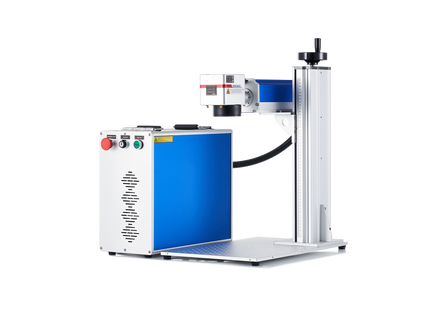
Fiber laser engravers are ideal for museums that primarily require metal engraving, where they can be useful for creating durable identification marks, restoring artifacts, fabricating exhibits, and producing replicas without damaging original objects. They're the standard tool for permanent collection tagging, accession plates, and equipment labeling, but they cannot cut or engrave most organic materials.
What Kinds of Museums Require Fiber Laser Engravers?
| Museum Type | Typical Projects | Why a Fiber Laser Is Ideal |
| Military Museums | Identification plates for weapons, medals, dog tags, military equipment, replica serial numbers, durable metal exhibit labels | Produces permanent, high-contrast markings on stainless steel, brass, and aluminum without damaging the metal. |
| Railway Museums | Restored locomotive nameplates, replacement part markings, engraved donor plaques, metal signage | Accurately recreates engraved metal components while providing durable identification for restored equipment. |
| Automotive Museums | VIN plates, dashboard tags, engine identification plates, restoration labels, display plaques | Creates crisp, permanent engravings on metal components commonly found in classic vehicle restorations. |
| Aviation Museums | Aircraft component labels, replica cockpit panels, instrument tags, maintenance markings | Delivers precise, wear-resistant markings required for aircraft restoration and long-term asset identification. |
| Industrial Heritage Museums | Machinery nameplates, specification tags, replacement part markings, interpretive signage | Easily reproduces industrial metal plates and identification tags while supporting restoration projects. |
| Science and Technology Museums | Interactive exhibit panels, scientific instrument labels, educational demonstration models | Produces durable engraved metal components for exhibits that experience frequent public interaction. |
| Mining Museums | Equipment identification plates, miners' brass tags, durable exhibit signage | Creates corrosion-resistant, long-lasting markings suitable for restored mining equipment and artifacts. |
| Maritime Museums | Ship nameplates, engine identification plates, brass navigation instruments, informational plaques | Engraves corrosion-resistant metals commonly used in marine artifacts with exceptional precision. |
3. Diode Lasers for Museums: Affordable, but Limited Use
Diode laser engravers are compact and affordable but typically require an open frame, meaning everyone in the room needs protective eyewear during operation. For this reason, diode lasers are best suited to museums as a secondary engraving source inside an enclosed hybrid system, rather than as a standalone public-facing machine.
 The 4 Best Laser Engravers for Museums in 2026
Whether you're producing exhibition signage, engraving accession plates, or running educational maker workshops, these four OMTech machines cover the needs of most museums.
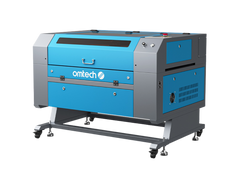
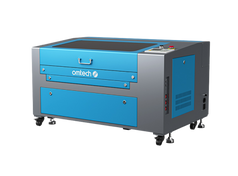
1. OMTech Marker AF2028-60 (60W CO₂ Laser): Best Overall for Museum Signage and Display Fabrication
Museums that regularly produce full exhibition installations need a machine that can keep up with large-format work. The OMTech AF2028-60 is the strongest all-around choice for museums that regularly fabricate exhibition materials, interpretive signage, acrylic display stands, and custom mounting components.

Key Features
- A sizeable 20" x 28" working area suited to exhibition panels and oversized labels
- A maximum cutting speed of 600mm/s
- An autofocus system that reduces setup time between different materials
- A camera system that helps position artwork accurately on irregularly shaped plaques, historical reproductions, or custom exhibit pieces without repeated trial runs
Its 60W CO₂ laser offers enough power for both precision engraving and production-scale cutting while maintaining the accuracy required for museum-quality work. Designed as a fully enclosed desktop system, it balances professional performance with the safety standards expected in institutional environments.
It is best for exhibition signage, acrylic display fabrication, interpretive panels, and mounting components.
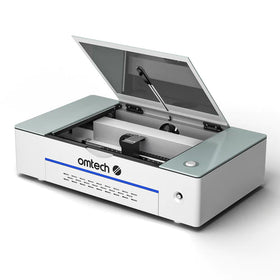
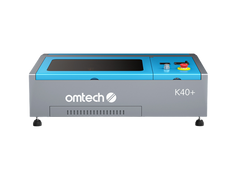
2. OMTech Polar Lite (55W CO₂ Laser): Best Compact Laser for Museum Education Labs
Museums with limited workspace or public education programs will appreciate the OMTech 55W Polar Lite's compact footprint and beginner-friendly workflow. Although smaller than the Pronto series, it still delivers excellent engraving quality for acrylic, wood, cardboard, leather, and paper.

Key Features
- Compact desktop design suited to shared classrooms and small labs
- One-click autofocus
- A built-in positioning camera
- Pass-through slots for engraving longer materials
- Support for both LightBurn and RDWorks
Best for: Museum education programs, visitor workshops, prototype exhibit fabrication, small signage, makerspaces.
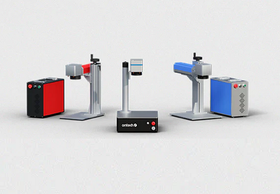
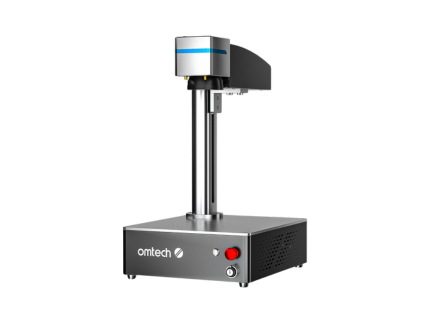
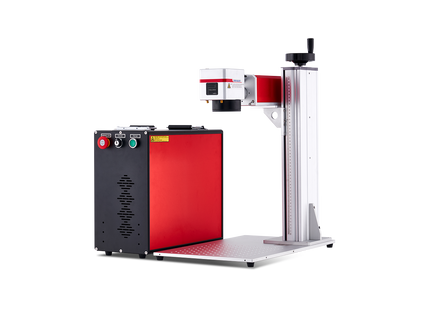
3. OMTech MOPA Autofocus Fiber Laser: Best for Collection Management and Metal Asset Marking
Museum collections require permanent, highly legible identification markings that won't fade over time. The OMTech MOPA Fiber Lasers (20W-60W) excel at engraving stainless steel, aluminum, brass, titanium, and other metals used for accession plates, equipment labels, archival inventory tags, and maintenance tools.
Unlike standard fiber lasers, MOPA technology provides greater control over pulse duration, enabling cleaner engravings on sensitive metals and even color marking on certain types of stainless steel.
 Why museums choose it:
- Exceptional metal engraving precision
- Fast galvo engraving speeds
- Autofocus for repeatable accuracy
- Suitable for serial numbers, QR codes, and accession IDs
- Produces permanent, wear-resistant markings
Best for: Collection inventory, metal accession plates, equipment identification, asset tracking, donor plaques.
OMTech Laser Engravers For Museums: Quick Comparison
| Model | Best For | Primary Materials |
| OMTech Pronto 35 | Museum signage and exhibit fabrication | Acrylic, wood, paper, leather, glass |
| OMTech Polar Lite | Education labs and makerspaces | Wood, acrylic, cardboard, leather |
| OMTech MOPA Fiber | Collection management and inventory | Stainless steel, aluminum, brass, titanium |
| OMTech Solis Duo | Museums working with both metals and non-metals | Metals, wood, plastics, leather, slate |
Essential Features Every Museum Should Prioritize on a Laser Engraver
- Class 1 Safety enclosure: Safety should always come first. Fully enclosed Class 1 systems prevent accidental laser exposure and are generally the only practical option for public institutions.
- Professional fume extraction: Laser engraving generates smoke, microscopic particulates, and volatile organic compounds (VOCs). Basic desktop air purifiers are generally not sufficient for continuous institutional use.
- Rotary attachment: Many museum projects involve cylindrical or curved objects, including commemorative gifts, bottles, mugs, tubes, or display pieces. A rotary attachment greatly expands the range of items that can be engraved.
- Suitable camera positioning: An integrated camera significantly reduces setup time by allowing users to drag and position artwork directly onto photographs of the workpiece.
- A large working area: Choosing a machine with a generous work area reduces the need to split large projects into multiple pieces.
- Software and workflow compatibility: Machines that support intuitive, widely used software, such as LightBurn or RDWorks, make it easier to train new staff, standardize workflows across departments, and share design files between exhibition, education, and collections teams.
 Safety and Compliance Best Practices for Museum Laser Programs
Because museums frequently operate laser equipment in shared or public-facing spaces, safety protocols deserve more attention than they would in a typical commercial workshop:
- Staff training and sign-off: Only trained staff should operate the machine, and new operators should be walked through material selection, settings, and emergency shutoff procedures before working unsupervised.
- Posted safety procedures: Clear signage near the machine should outline safe materials, emergency contacts, and basic operating rules for volunteers or rotating staff.
- Fire safety: A fire extinguisher rated for electrical and chemical fires should be kept near any laser installation, and machines should never be left unattended while running.
- Material verification logs: For institutions processing donated, historical, or unlabeled materials, keeping a simple verification log helps prevent accidental engraving of unsafe or archivally sensitive items.
- Regular maintenance schedules: Lens cleaning, ventilation filter changes, and alignment checks should be scheduled routinely to keep both output quality and safety consistent.
Frequently Asked Questions on Laser Engravers For Museums
1. Can one laser engraver handle both signage and metal collection tags?
Not efficiently. CO₂ lasers excel at organic materials like acrylic and wood but cannot mark metal, while fiber lasers do the opposite. Museums needing both should either operate two machines or choose a hybrid system like the Solis Duo, which combines fiber and diode sources in one enclosure.
2. Is a diode laser ever appropriate for a museum?
Standalone open-frame diode lasers are generally not recommended for public or shared museum spaces, since they require protective eyewear for anyone nearby. Diode lasers are better suited as a secondary engraving source inside a fully enclosed hybrid machine.
3. How important is ventilation for a museum laser program?
Very important. Beyond staff health, laser fumes and particulates can settle on nearby collection items over time. Museums should use professional-grade filtration or direct external venting rather than relying on basic desktop air purifiers.
4. What's the safest laser class for a museum environment?
Class 1 enclosed systems are the standard recommendation, since they contain the laser beam entirely within the housing and don't require operators or bystanders to wear protective eyewear.
5. Can laser engravers create accessible or tactile exhibit materials?
Yes. CO₂ and fiber lasers are both commonly used to create raised or textured tactile graphics, Braille labeling, and touchable models for accessibility programs, making laser engraving a useful tool for inclusive exhibit design.
Final Thoughts on Laser Engravers For Museums
The best laser engraver for a museum depends on the institution's primary responsibilities. For exhibition fabrication, signage, acrylic displays, and educational materials, a high-quality enclosed CO₂ laser, such as the OMTech Pronto 35 or Polar Lite, remains the most versatile solution. Museums focused on inventory management, permanent asset identification, or metal collection labeling should instead consider a fiber laser like the OMTech MOPA. Institutions with broader fabrication departments often benefit from operating both technologies side by side, or consolidating them into a hybrid system like the Solis Duo.
You may also be interested in how to engrave wood and some wood laser projects you can achieve with a laser engraver.